Setting
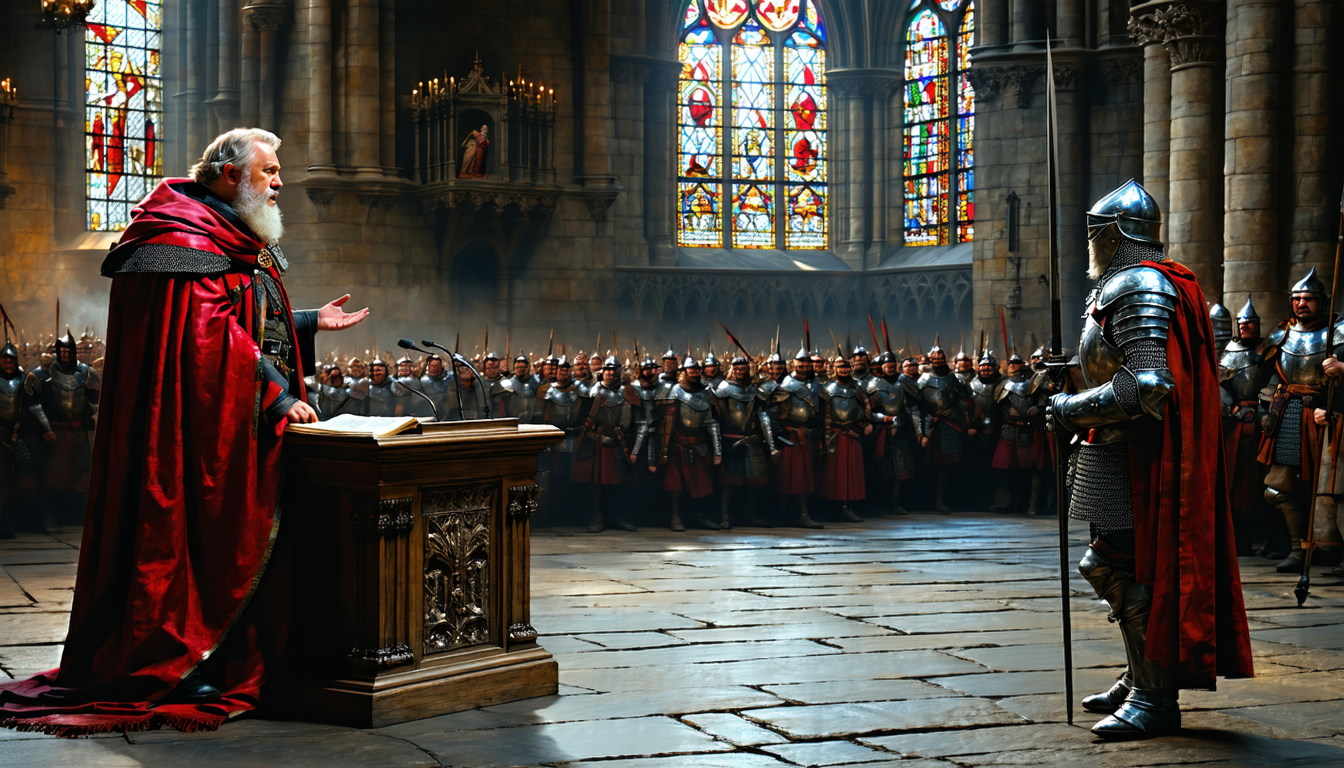
The royal chambers of Westminster Palace, a grand and ornate room with high ceilings, thick stone walls, and intricate Gothic arches. The chamber is adorned with heavy tapestries depicting scenes of royal authority and biblical themes. Large, leaded glass windows allow shafts of sunlight to filter in, casting long shadows across the floor.
Characters
The figures in this scene as an entity network — co-presence links everyone in the moment; speakers who trade lines are bound tighter. Turn the resolution dial to reveal depth the engine actually computed.
King Edward III
primary
A tall, well-built man in his late 30s with a strong jawline and piercing blue eyes. His face is framed by a neatly trimmed beard and shoulder-length auburn hair, slightly streaked with gray. He carries himself with the regal bearing of a warrior-king, though recent burdens have added lines of fatigue around his eyes.
Royal Treasurer
primary
A gaunt man in his late fifties, with sharp features and a receding hairline of thin grey hair. His deep-set eyes are framed by dark circles, a testament to sleepless nights spent poring over financial accounts. His fingers are stained with ink, and he carries himself with the rigid posture of a man accustomed to precision.
Baron Fitzwalter
secondary
A middle-aged nobleman of sturdy build, with a square jaw and piercing grey eyes that reflect both intelligence and a growing frustration. His face is weathered from years of overseeing his estates, and his dark brown hair is streaked with silver at the temples. His posture suggests both nobility and a certain weariness.
Court Scribe
secondary
A thin, middle-aged man with a slightly hunched posture from years spent bent over his work. His sharp features are framed by short, dark hair streaked with gray, and his keen eyes dart between the speakers and his parchment. His fingers are ink-stained, and he has a habit of tapping his quill lightly against the edge of his writing desk when deep in thought.
Royal Guard
background
A tall, broad-shouldered man in his late 30s with a weathered face, a closely cropped beard, and a stern, watchful gaze. His hands are calloused from years of wielding weapons, and his stance is rigid with military discipline. A faint scar runs along his left cheekbone, a testament to past battles.
Dialog
King Edward III
We have heard the arguments from both sides, yet still the matter weighs heavy upon our crown. The fields lie fallow while men grow bold in their demands.
Royal Treasurer
By the precedent of King Henry's assize, we must fix wages at pre-pestilence levels lest the very fabric of our economy unravel. The Exchequer rolls show a fortyfold increase in demands for higher pay since the contagion.
Baron Fitzwalter
And what good are your parchments when my fields stand empty? The villeins know their worth now - they'll take to the roads rather than bend knee for stale bread and thin ale!
King Edward III
Peace, Fitzwalter. We did not summon this council to watch noblemen brawl like tavern drunks.
Royal Treasurer
If it please Your Grace, the Statute must bind all laborers to their proper stations. Without such measures, the commons will forget their place entirely.
Baron Fitzwalter
Bind them with what chains? The old ones are broken, and we've not the men to forge new ones.
King Edward III
Then we shall forge them with law. Let it be written that no man shall take wages above those set in the twentieth year of our reign, on pain of imprisonment.