Treaty of Cambrai
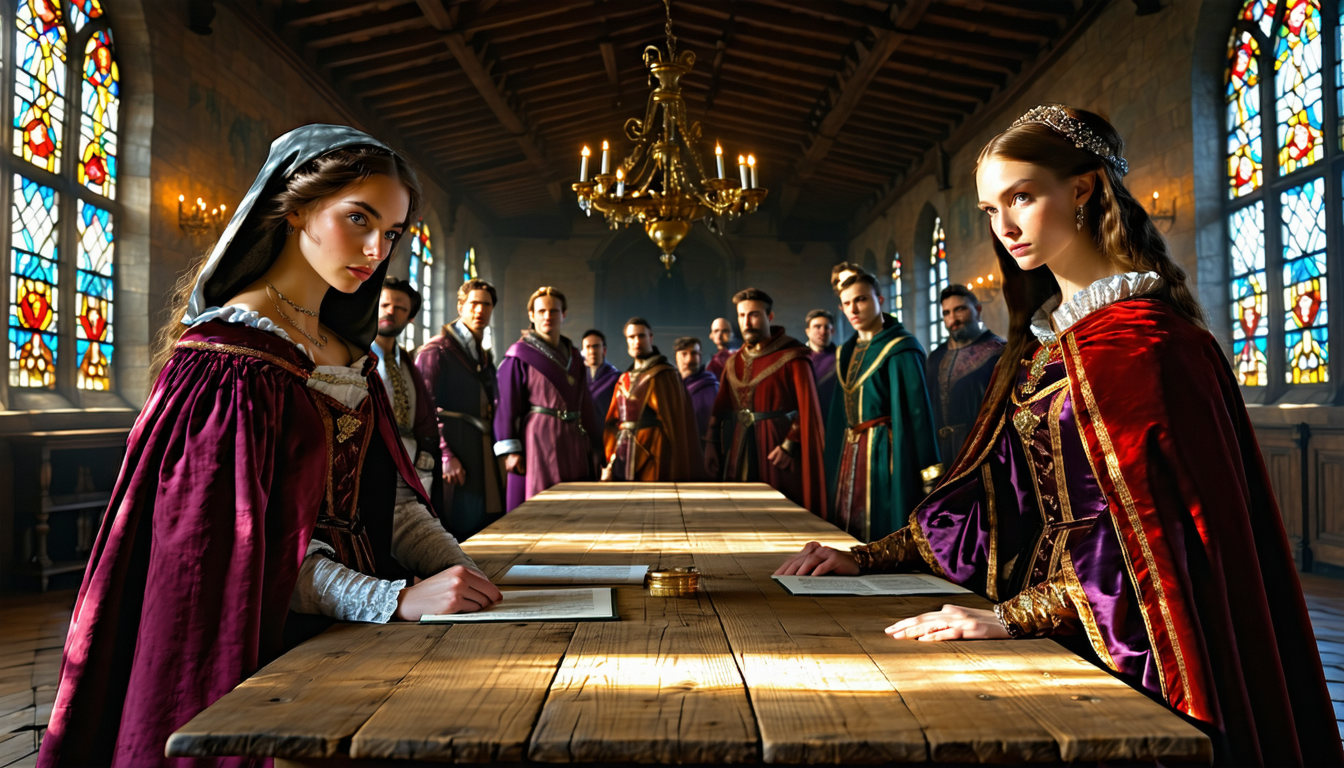
Louise of Savoy and Margaret of Austria, representing France and the Holy Roman Empire respectively, are finalizing the Treaty of Cambrai in the grand council chamber. The moment is charged with the w
Setting
Grand Council Chamber of the Hôtel de Ville in Cambrai, a stately Renaissance town hall with high ceilings and ornate wood paneling. The room is arranged with two opposing tables for the delegations, centered around a ceremonial space where the treaty will be signed.
Characters
The figures in this scene as an entity network — co-presence links everyone in the moment; speakers who trade lines are bound tighter. Turn the resolution dial to reveal depth the engine actually computed.
TNGF
SELECTED
Louise of Savoy
primary
A regal woman in her early fifties with a slender yet commanding presence. Her sharp hazel eyes convey both intelligence and weariness, framed by fine lines of age and responsibility. Her pale complexion is accentuated by carefully arranged auburn hair, partially covered by an elaborate headdress. Her hands, though delicate, bear the ink stains of countless diplomatic documents.
Margaret of Austria
primary
A stately woman in her late forties, with a composed demeanor and sharp Habsburg features—high cheekbones, a slightly aquiline nose, and keen, observant eyes. Her posture is erect, reflecting her regal upbringing, and her hands are delicate yet purposeful.
French Secretary
secondary
A lean man in his late thirties with sharp features, neatly trimmed dark brown hair, and a clean-shaven face. His hands are ink-stained from long hours of writing, and he wears a pair of small, round spectacles perched on his nose.
Imperial Notary
secondary
A middle-aged man with a lean, scholarly build, his sharp features accentuated by a neatly trimmed beard and wire-framed spectacles perched on his nose. His pale complexion suggests long hours spent indoors with legal documents.
Guard Captain
background
A seasoned French soldier in his late 40s, with a muscular build and a weathered face marked by years of campaigning. His short-cropped salt-and-pepper beard frames a square jaw, and his hands bear the calluses of swordplay. A faded scar runs diagonally across his left cheekbone.
Dialog
Louise of Savoy
The peace we ratify today must be as enduring as the marble of our ancestors' monuments, Madame. Let it stand not merely upon parchment, but upon the mutual beneficence of our houses.
Margaret of Austria
As Minerva's owl flies at dusk, so too does wisdom come at the closing of conflict. These terms honor both our sovereigns while sparing Christendom further bloodshed.
Imperial Notary
If my lady permits—the clause regarding Milanese revenues requires the subjunctive 'contingeret' rather than 'contigerit', lest it imply...
Margaret of Austria
The Emperor's lawyers shall find no fault in our Latin, nor our French. Proceed.
Louise of Savoy
Our secretary will attest the Burgundian dowry provisions mirror exactly those sworn at Madrid. Even Mars himself could find no cause for quarrel.
French Secretary
As Your Grace observes—the identical sums and dates appear here in Article the Seventh.
Margaret of Austria
Then let Dis Pater claim these wars to his underworld, while we restore Apollo's light to our realms.
Chat with Characters
Causal neighbors · 109 linked moments
T
1529
· contemporaneous
C
451
· same figure
T
1529
· same figure
T
1797
· same figure
T
1529
· same figure
T
1230
· same figure
T
1529
· same figure
T
1526
· follows
P
1529
· contemporaneous
T
1529
· contemporaneous
T
1529
· same figure
T
1529
· contemporaneous
T
1529
· same figure
C
451
· same figure
F
325
· same figure

1940
· same figure
T
1529
· contemporaneous
T
1529
· same location
T
1529
· same figure
L
1526
· same era
L
1526
· precedes
T
1529
· contemporaneous
T
1529
· same figure
T
1526
· same figure

1529
· contemporaneous
T
1529
· contemporaneous
T
1529
· same era
T
1529
· follows
C
451
· same figure
T
1529
· same figure
T
1797
· same figure
T
1529
· same figure
T
1230
· same figure
T
1529
· same figure
P
1529
· contemporaneous
T
1529
· contemporaneous