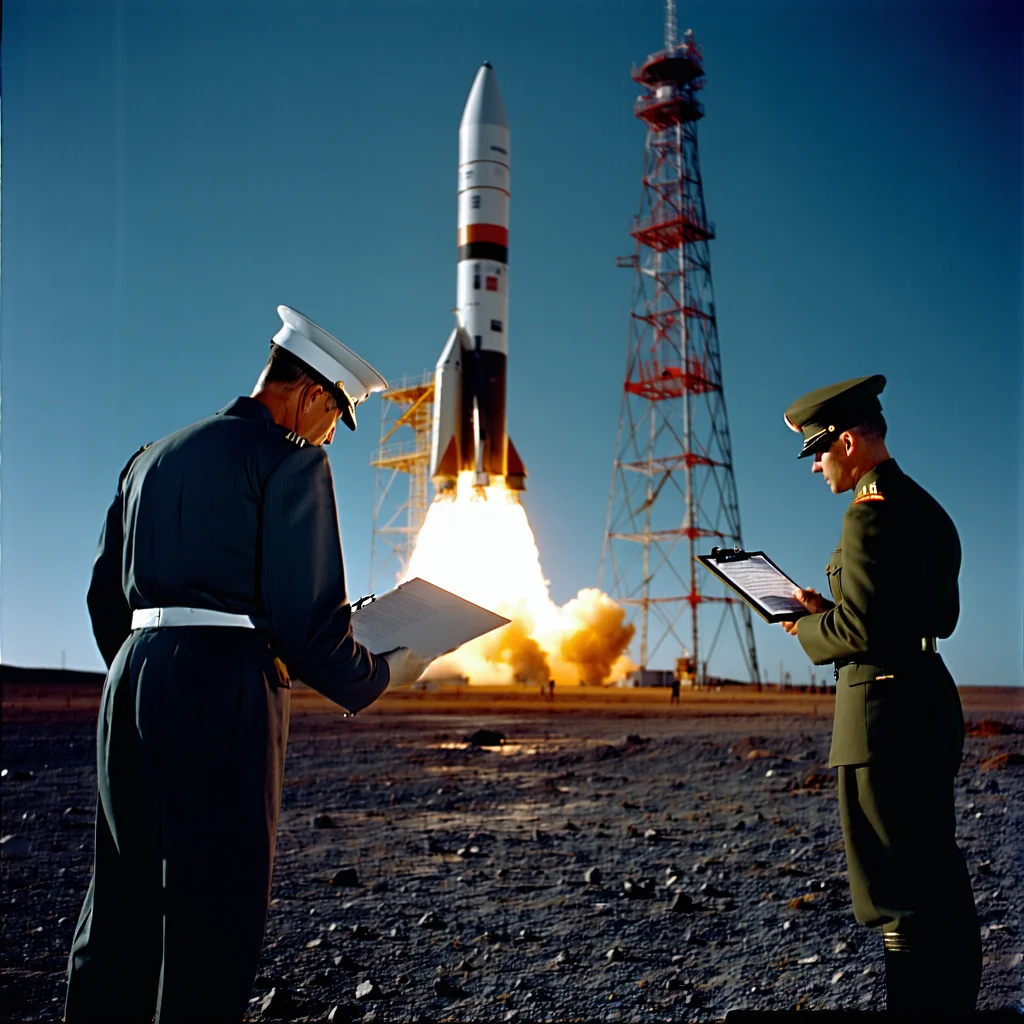
Launch of Sputnik 1
The Soviet Union launches Sputnik 1 — a polished 83.6 kg aluminum sphere with four radio antennae — from the Tyuratam launch facility in the Kazakh SSR atop a modified R-7 ICBM at 19:28:34 UTC. Its 20 MHz "beep-beep" signal, detectable by amateur radio operators worldwide, proves the Soviets can place objects in orbit and by implication deliver nuclear warheads intercontinentally. The "Sputnik crisis" that follows reshapes American science policy within months: ARPA is created on February 7, 1958 to prevent future technological surprise (its Information Processing Techniques Office will later fund MIT, Stanford, and CMU AI labs plus ARPANET); NASA is established on July 29, 1958; the National Defense Education Act floods federal money into science and engineering education on September 2, 1958. The satellite completes approximately 1,440 orbits over three months before burning up on reentry January 4, 1958. Sputnik is the single event that causally connects the birth of the Space Race — culminating in Kennedy's moon commitment and the Apollo program — with the institutional infrastructure that funded American artificial intelligence research for decades. Chief Designer Sergei Korolev, whose identity remained a state secret, orchestrated the launch that changed the trajectory of two civilizations.