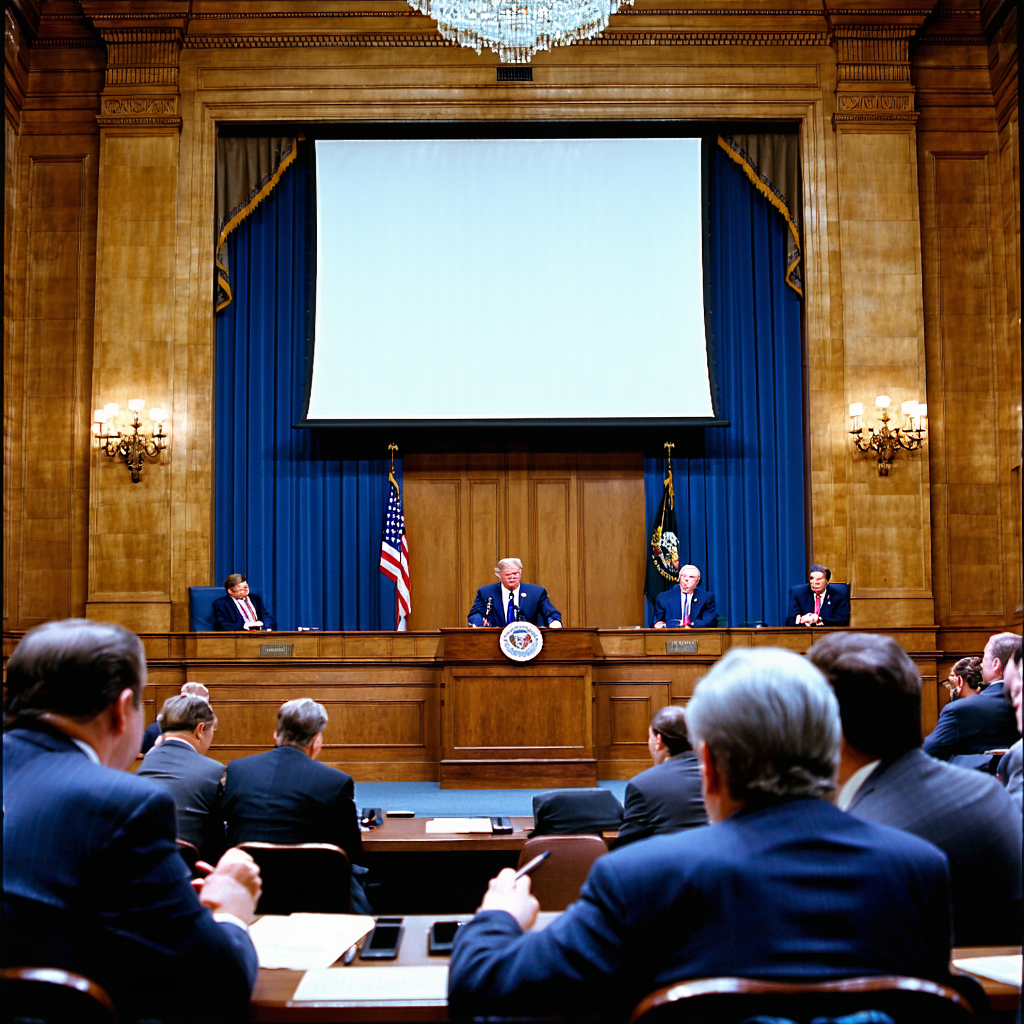
Rogers Commission Report Release
The Rogers Commission is publicly releasing its findings on the Space Shuttle Challenger disaster, revealing systemic failures and managerial negligence within NASA. The press conference is a moment o
Setting
The National Press Club in Washington, D.C., a formal conference room filled with journalists, NASA officials, and members of the Rogers Commission. The room is lined with microphones and recording equipment from various news outlets.
Characters
The figures in this scene as an entity network — co-presence links everyone in the moment; speakers who trade lines are bound tighter. Turn the resolution dial to reveal depth the engine actually computed.
TNGF
SELECTED
William P. Rogers
primary
A distinguished elderly gentleman in his mid-70s, with thinning silver hair combed neatly back, a square jawline, and sharp blue eyes that convey both authority and weariness. His posture remains upright despite his age, with a slight forward lean that suggests engagement with his audience.
Richard Feynman
primary
A 68-year-old physicist with thinning gray hair swept back, prominent eyebrows, and a wiry frame. His sharp, inquisitive eyes are slightly magnified by round glasses. He has a lined but energetic face, with a slight stoop to his shoulders that belies his intellectual vigor.
Neil Armstrong
secondary
A 55-year-old man with a lean, disciplined build from his astronaut training, standing at 5'11" with neatly combed silver-gray hair and deep-set blue eyes that carry the weight of experience. His face bears the faint lines of a man who has seen both the heights and depths of human endeavor.
Lead Journalist
secondary
A middle-aged man in his late 40s with sharp features, short salt-and-pepper hair, and wire-rimmed glasses. His lean build suggests long hours at a desk, and his piercing gaze conveys both professional skepticism and genuine concern.
NASA Official
background
A middle-aged man with a slightly receding hairline and a tense posture, his face lined with the stress of the moment. His sharp features and deep-set eyes give him an air of authority, though his current demeanor is one of unease.
Dialog
William P. Rogers
The Commission's findings indicate that the Challenger tragedy resulted from a series of procedural and technical failures, compounded by inadequate communication channels between contractor and agency personnel.
Richard Feynman
Look, let's not dress this up—the O-rings failed because Morton Thiokol and NASA management ignored their own engineers' warnings about cold weather. That's not 'inadequate communication,' that's willful negligence.
Lead Journalist
Mr. Chairman, for the record—does the Commission's conclusion about 'flawed decision-making' imply criminal liability for anyone at NASA?
William P. Rogers
Our mandate was fact-finding, not adjudication. However, one might reasonably conclude that certain individuals exercised... questionable judgment under pressure.
Richard Feynman
In other words—the shuttle blew up because someone didn't want to delay a PR event. That's not 'questionable judgment,' it's malpractice.
Lead Journalist
Dr. Feynman, your appendix about NASA's 'safety culture' was notably blunt. Should the public trust an agency that dismisses its own engineers?
Richard Feynman
Trust requires truth—and truth starts with admitting these weren't 'procedural failures' but human ones. My coffee cup demonstration proved that.
Chat with Characters
Causal neighbors · 475 linked moments
1969
· same figure
1969
· same figure
S
1986
· follows
S
1988
· same era
S
1988
· follows
S
1986
· precedes
S
1986
· same era
S
1986
· precedes
E
1986
· same era
E
1986
· precedes
E
1986
· same location
E
1986
· same figure
S
1988
· same era
S
1988
· follows
S
1986
· same era
S
1981
· same era
S
1981
· precedes
S
1986
· same era
S
1986
· precedes
C
2003
· same location
S
1986
· same era
S
1986
· precedes
S
1986
· same era
S
1986
· precedes
S
1986
· same era
S
1986
· precedes
C
2003
· same location
R
1986
· same era
R
1986
· precedes
S
1988
· same era
S
1988
· follows
A
1969
· same figure
R
1986
· contemporaneous
R
1986
· same figure
S
1988
· same era
S
1988
· follows