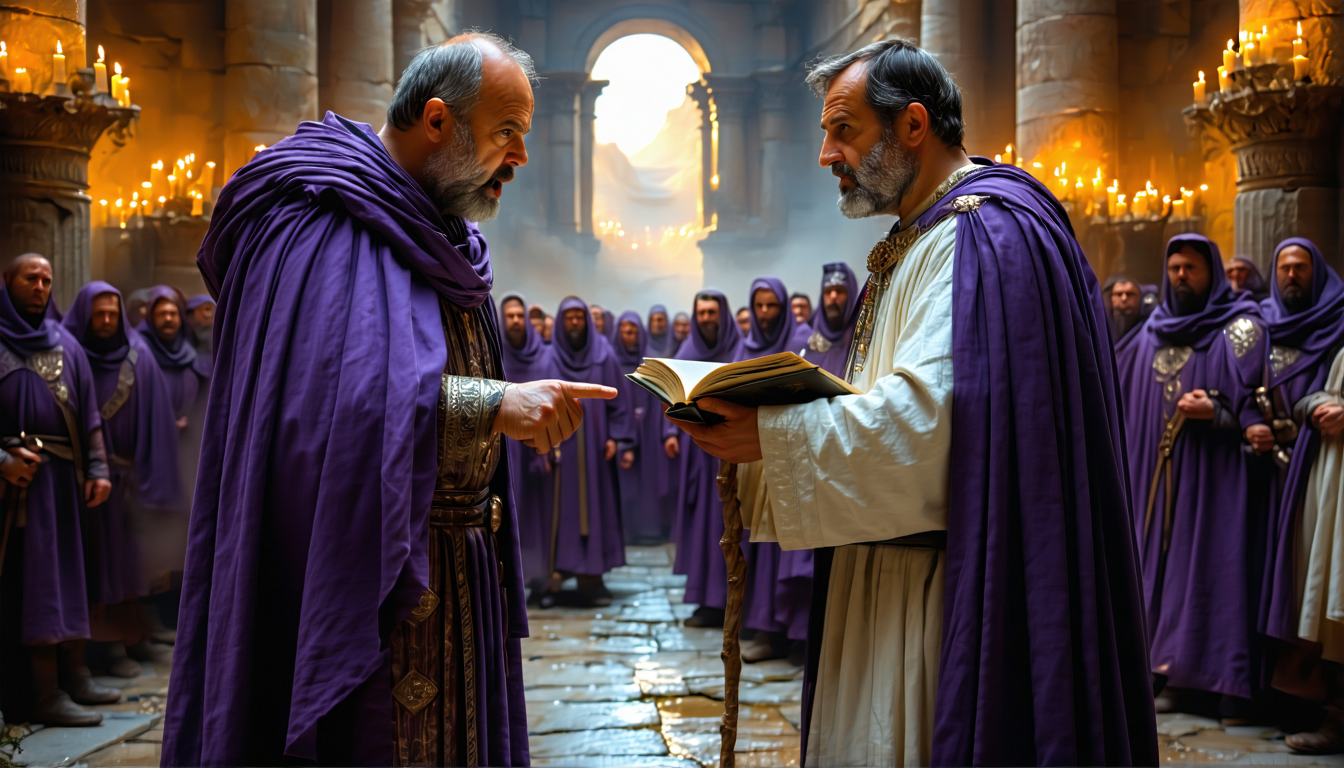
Council of Ephesus
Cyril of Alexandria confronts Nestorius in a heated theological debate over the nature of Christ, with the fate of Christian doctrine hanging in the balance before Emperor Theodosius II's representati
Setting
The interior of the Church of Mary in Ephesus, a grand basilica with high vaulted ceilings and marble columns. The nave is filled with bishops, clergy, and imperial representatives, all gathered for the council. The apse is adorned with early Christian mosaics, and the altar is the central point of focus.
Characters
The figures in this scene as an entity network — co-presence links everyone in the moment; speakers who trade lines are bound tighter. Turn the resolution dial to reveal depth the engine actually computed.
TNGF
SELECTED
Cyril of Alexandria
primary
A middle-aged man with a commanding presence, his dark beard streaked with gray, and piercing eyes that reflect both his theological fervor and political acumen. His posture is upright, exuding authority, and his hands are often animated when speaking, emphasizing his points with deliberate gestures.
Nestorius
primary
A middle-aged man of medium height with a lean, ascetic build, his sharp features accentuated by a neatly trimmed beard. His piercing eyes reflect both intellectual intensity and the strain of prolonged theological debate. His hands are expressive, often gesturing to emphasize points during discourse.
Imperial Representative
secondary
A middle-aged man of average height with a lean but authoritative build. His sharp, angular features are accentuated by a neatly trimmed beard, and his piercing dark eyes survey the room with calculated scrutiny. His posture exudes imperial dignity, and his hands are adorned with a signet ring bearing the seal of Emperor Theodosius II.
Bishop of Ephesus
secondary
A middle-aged man of average height with a slightly stooped posture from years of scholarly work. His face is lined with wisdom, featuring a neatly trimmed gray beard and deep-set, observant eyes. His hands are delicate, accustomed to holding scrolls and writing implements.
Deacon
background
A middle-aged man of slight build, with a clean-shaven face and short, dark hair. His deep-set eyes are framed by faint lines of worry, and his hands are ink-stained from constant writing. He wears a simple wooden cross around his neck, a sign of his clerical status.
Dialog
Cyril of Alexandria
Do you dare deny, Nestorius, that the blessed Virgin is rightly called Theotokos, as the holy fathers have affirmed since the earliest days of the Church?
Nestorius
I affirm only what Scripture declares—that Mary bore the man Jesus, who is united to the divine Word, but to call her 'Mother of God' risks confounding the natures we must distinguish.
Imperial Representative
Enough. The Emperor's patience wears thin with these disputes. Will you not seek concord for the sake of the Pax Romana?
Cyril of Alexandria
There can be no concord with heresy, noble representative. To divide Christ is to rend the very fabric of our faith.
Nestorius
It is no heresy to guard the truth—unless you would have us worship a mere man, or claim the Eternal Word knew infancy?
Cyril of Alexandria
Blasphemy! The Word became flesh—not as a garment worn, but in hypostatic union! Will you make our Lord a double being?
Imperial Representative
Silence! This council will not descend into chaos. The Emperor demands resolution—not rancor.
Chat with Characters
Causal neighbors · 29 linked moments
C
431
· contemporaneous
C
431
· contemporaneous
C
431
· contemporaneous
S
449
· same location
D
444
· same figure
C
431
· same figure
S
449
· same figure
C
451
· precedes
R
449
· same location
D
444
· same figure
C
431
· contemporaneous
C
431
· same location
C
431
· same figure

431
· contemporaneous
431
· same figure
C
431
· contemporaneous
C
431
· contemporaneous
C
431
· contemporaneous
S
449
· same location
D
444
· same figure
C
431
· same figure
S
449
· same figure
R
449
· same location
D
444
· same figure
C
431
· contemporaneous
C
431
· same location
C
431
· same figure
431
· contemporaneous
431
· same figure